
Points prevent emergence
How our habits of thought prevent understanding nature
When we say that the wave function is emergent, or that space is emergent, or any other concept, we should immediately conclude that this contradicts the existence of points.
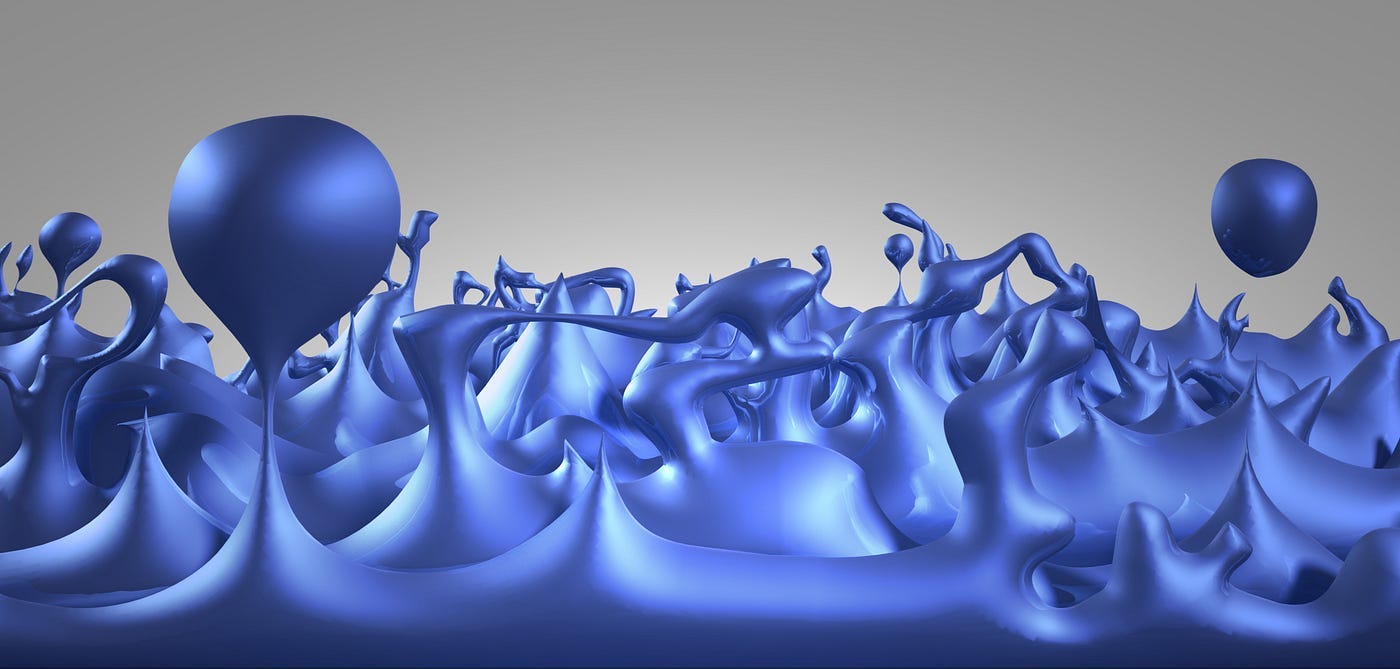
(NASA/CXC/M.Weiss)
Now, we are used to saying that space is made of points since Euclid said so in the first sentence of his great book, the Elements, over 2200 years ago. (It is still worth reading.) We are also used to saying that wave functions are functions of space, thus with a value at every point. And the idea of the point was indeed successful: we deduce quantum theory and general relativity.
But the idea of point has two problems. It is approximate and thus wrong. But worse, it prevents progress. And I will concentrate on the latter aspect. (For the former, see this short page that explains the existence of a minimum length in nature, or a previous post.)
Simply said, the idea that space consists of points is the opposite of saying that it is emergent. And we know that space is emergent, because it fluctuates. This latter aspect is proven by the Unruh effect and also by the black hole entropy. In other words, if we want to understand what space is, we have to drop the idea that it consists of points. And this is a radical cut. Sometimes, pictures of space like the above are provided. But that picture cannot be correct: it shows fluctuations, but it is still made of points!
In other words, such pictures do not let space (or wave functions) emerge from some deeper substrate. Such pictures continue the old habit of thought of a continuous space - and prevent the understanding of emergence.
“Emergence” means that space (and wave functions) are approximations of something else. As long as points are used, emergence cannot be described, cannot be deciphered. Continuing to use points as fundamental constituents of space is the reason that the unification of physics took so long.
So the challenge of unification is clear: describe nature without points. This means to find arguments without points to explain why space has three dimensions, why there are three gauge interactions, why there are three generations of fermions, and where the masses and coupling constants come from.
The last topic is the final nail in the coffin of the concept of point: if one bases the laws of nature on points, one cannot explain masses and coupling constants. To explain them (and mixing angles), a different concept is needed.
*
Soon, we will put online our latest work on the strand model, which describes the standard model of particle physics with massive neutrinos and general relativity, and predicts the lack of measurable deviations from the two. It will also deduce the value of the fine structure constant and provide estimates for particle masses, all ab initio. An introduction to the strand model is found here.
* * *